In this story
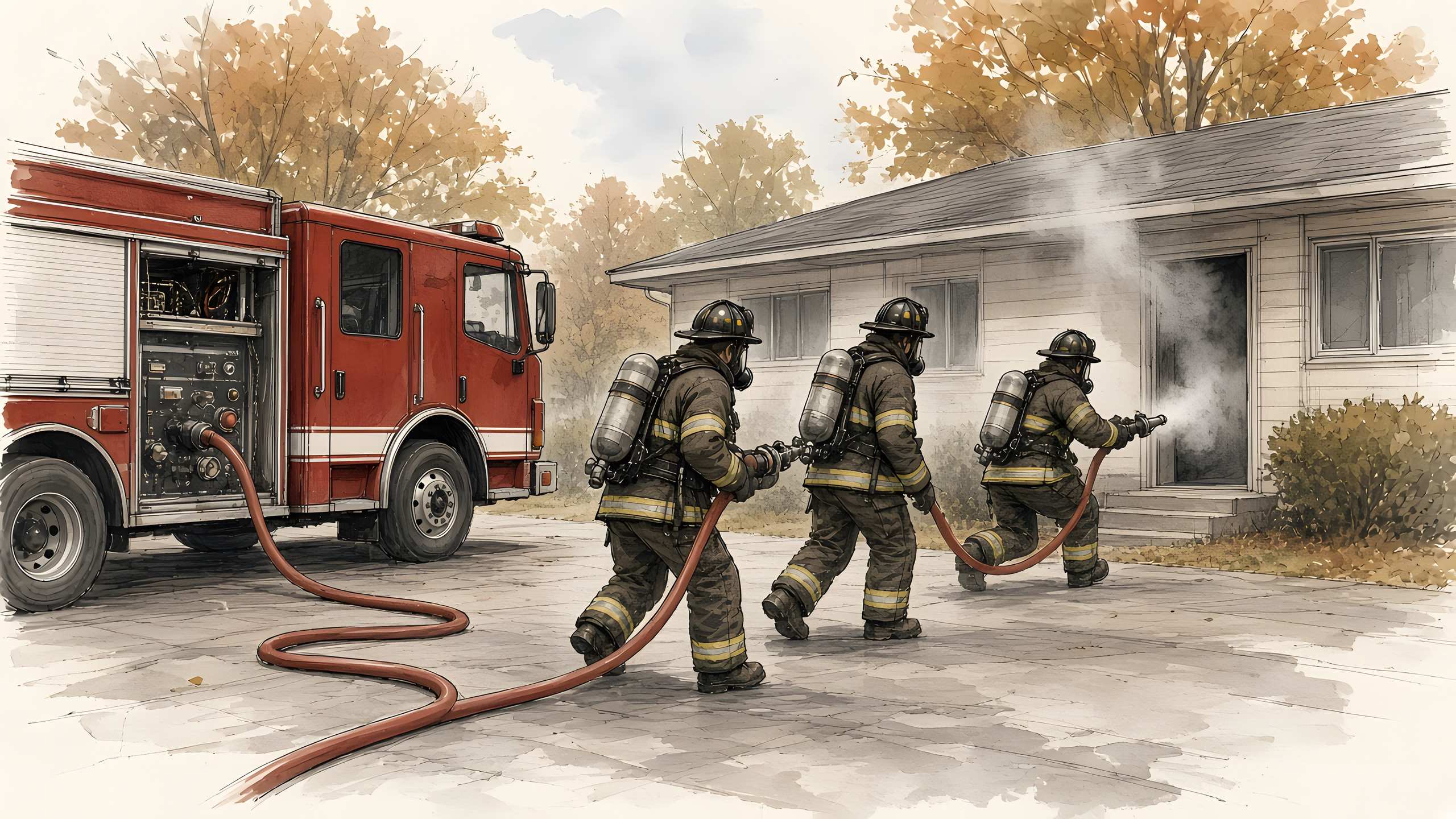
On March 14, 2001, Engine 3 pulled up to the Southwest Supermarket fire in Phoenix as the designated rapid intervention crew (RIC). Its officer reported heavy smoke on the west side of the store, and the incident commander sent the crew in with a handline to check the bakery for extension. Later in the fire, Firefighter/Paramedic Bret Tarver, 40, ran low on air and became lost inside a 27,905-square-foot building. Crews needed about 50 minutes from his first call for help to get him out, according to department records reported by 12News. He died of carbon monoxide poisoning and burns.
In its investigation, the National Institute for Occupational Safety and Health (NIOSH) made a recommendation departments still wrestle with: put more than one RIC in place when crews are working inside a large building with several ways in.
Phoenix did something less common. It set out to measure how long a rescue takes.
What Phoenix measured
Afterward, the department ran rapid intervention drills with 269 companies and 1,144 members in three buildings, and had Ron Perry of Arizona State University analyze the results. Assistant Chief Steve Kreis published the findings in 2003 under the title "Rapid Intervention Isn't Rapid."
The numbers explain the title. On average a crew needed 2.47 minutes to get ready, and entry came 2.55 minutes after the Mayday. Locating the downed firefighter averaged 5.33 minutes, and the whole rescue averaged 21.8. In the same drills, a bottle rated at 3,000 pounds per square inch (psi) lasted rescuers 16.5 to 18.5 minutes under that workload. The drills used no heat or smoke, and the downed firefighters were never more than 100 feet from the exit. Kreis wrote that with real smoke, fire and heat, a rescue could take longer.
The drills also showed how many people it took. Phoenix concluded that rescuing one firefighter took 12 more: a search team of six, a rescue team of at least four, and a command officer with an aide. About one rescuer in five got into trouble during the drills, and 16.9 percent left the building with their low-air alarm going. Phoenix's regional air management procedure, dated January 2018, still cites the drill data: 12 rescuers to remove one firefighter, and one rescuer in five needing help to get out.
Kreis wrote that the drills showed it is unreasonable to expect a single company to find, package, supply air to and remove a downed firefighter on its own.
Ashley Losch, a Glendale Fire Department captain who was a recruit when Tarver died, told 12News what's changed since. "His circumstances weren't the last time that has ever happened, and I'm sure that it will happen again. But how we react to it has changed, and that is what has saved lives," she said.
Two people versus four
A controlled comparison of team size comes from British Columbia. In 2010, researchers at the Justice Institute of British Columbia (JIBC), with funding from WorkSafeBC, timed rapid intervention teams (RIT) locating, packaging and removing downed firefighters. A single victim was 50 feet inside a building, and in the two-victim scenarios both were 100 feet in.
| Task | Team | Average time |
|---|---|---|
| Remove one victim | 2 members | 11.62 min |
| Remove two victims | 4 from the start | 16.67 min |
| Remove two victims | 2, then 2 more | 22.03 min |
| Lift victim through window | 4 members | 4.62 min |
| Lift victim through window | 2 members | 6.71 min |
A two-person team needed 1.66 minutes to bring an unconscious firefighter up one flight of stairs, and most participants found that short scenario extremely physically demanding.
With one victim 50 feet in, the researchers found no significant difference between two-person and four-person teams, because two people could handle that job. In the harder scenarios, team size mattered. Teams that started with four members got two victims out more than five minutes faster than teams that started with two and called for help once they reached the first victim. And air management made a clear difference. When nobody was assigned to watch the victim's air, the victim's mask was knocked loose and not replaced more often during removal.
The researchers recommended four roles: a team leader, an air management firefighter and two rescuers. A two-person team should be a leader and an air management position who call for more rescuers once they need them. They also recommended RIT training at least once a year.
Air is the clock
Every one of these timings runs against two air supplies, the downed firefighter's and the rescuers'. The JIBC researchers were blunt about the common 1,200-liter bottle, the one most crews still call a 30-minute cylinder: "Commonly used 1200L (30 min.) cylinders do not allow enough air supply for the victim fire fighter or the rescue team members." They recommended 1,800-liter (45-minute) cylinders as the minimum for interior work in atmospheres that are immediately dangerous to life and health. They also called for policies that get firefighters out before they start using the last 25 percent of their cylinder, the emergency reserve.
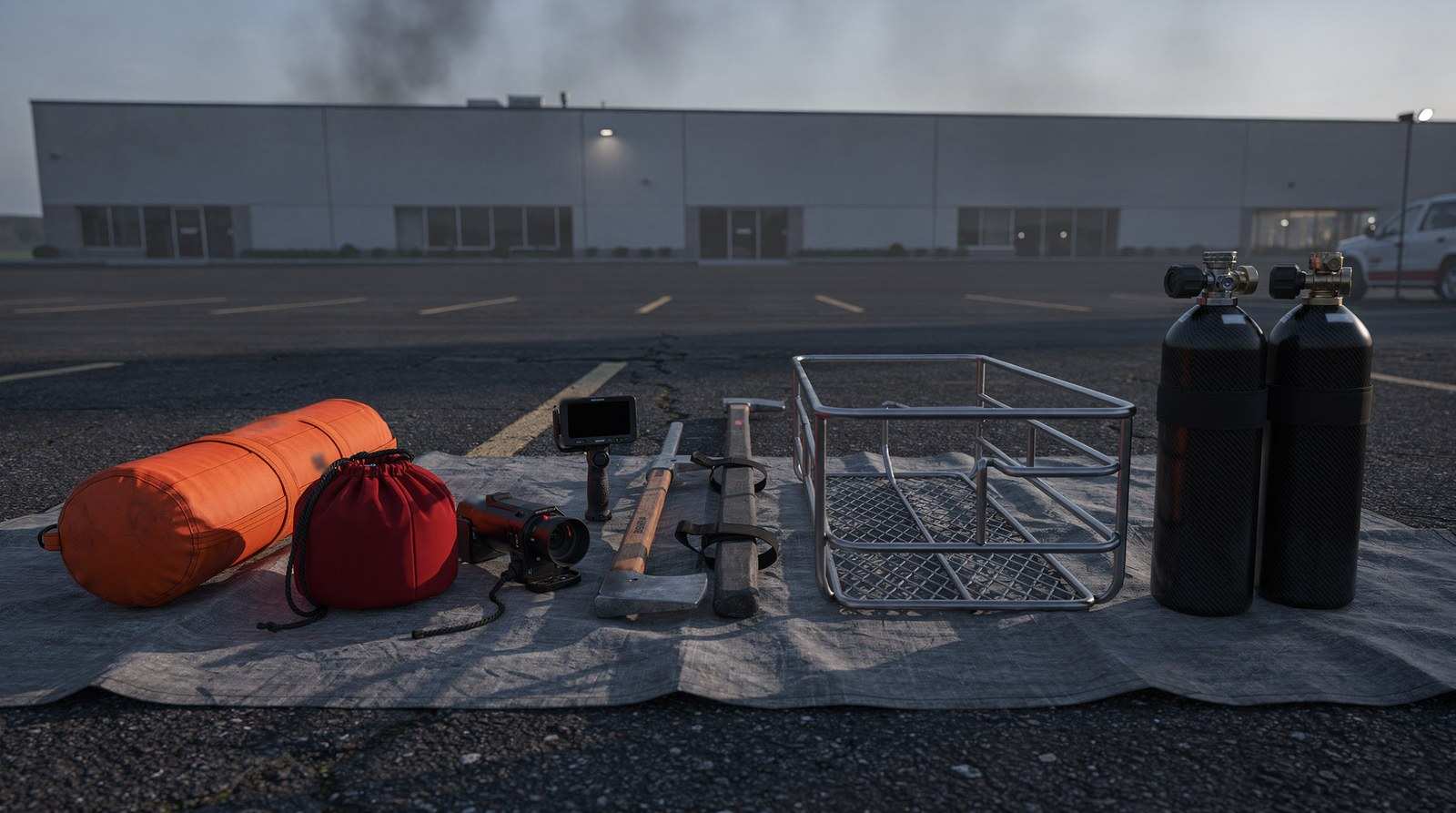
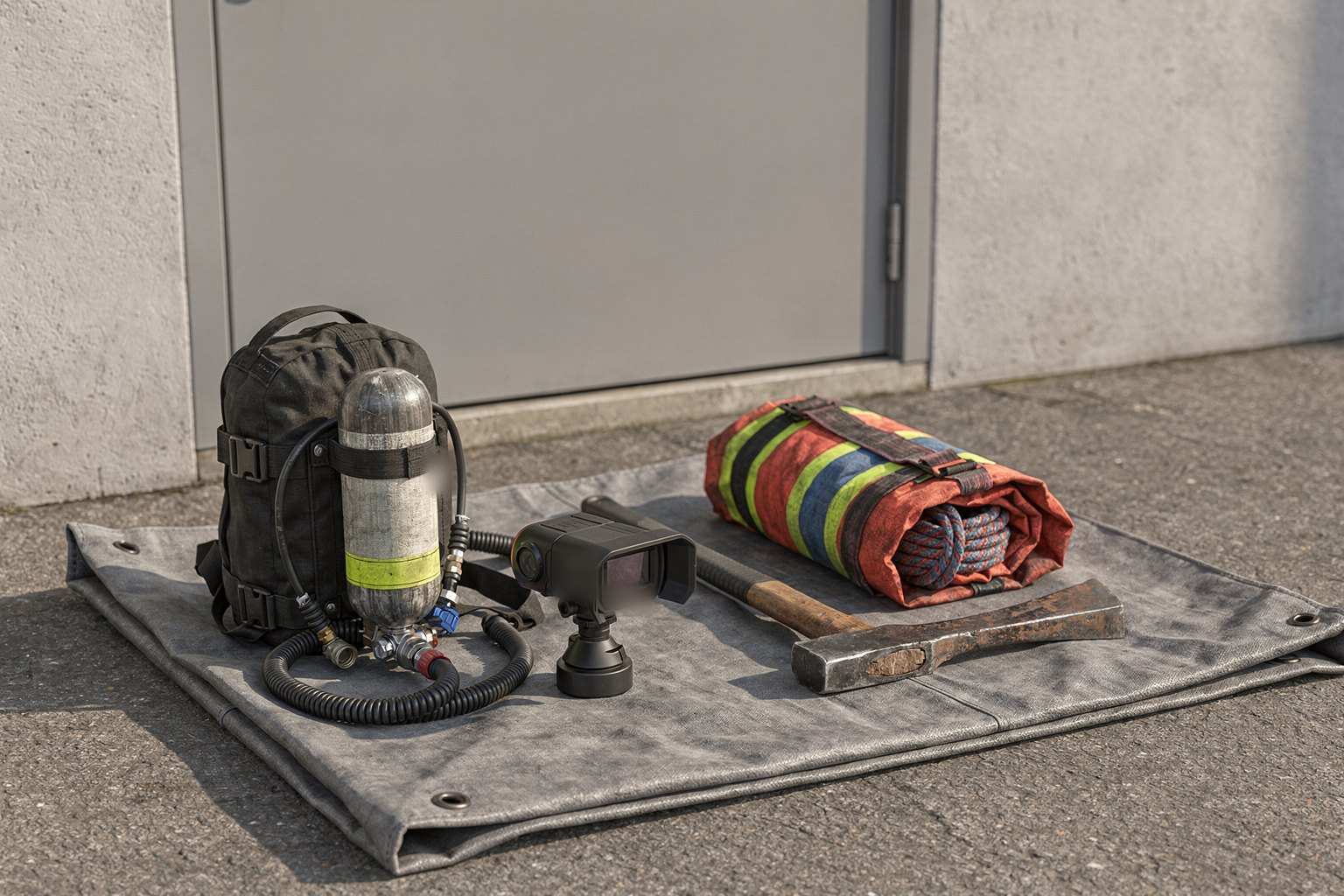
On a rescue, a firefighter working into the reserve risks becoming a second Mayday. Sometimes the crew has to leave without the victim. NIOSH's advice for that moment is to mark the location with a hose line or a rope bag with luminescent lights, so the next crew in can go straight to it.
What the rules require
The federal floor is the respiratory protection standard from the Occupational Safety and Health Administration (OSHA). For interior structural firefighting, at least two people go in together and at least two stay outside, trained and equipped to rescue them. One of the two outside can be the incident commander or safety officer, as long as that person can still do a rescue. The rule also says nothing in it stops firefighters from making a rescue before the whole team has assembled.
Two-in, two-out covers the start of interior work. It doesn't staff a rescue in a large building, which took 12 people in the Phoenix drills.
Training requirements for RIC used to sit in their own National Fire Protection Association (NFPA) standard, NFPA 1407. The 2026 edition of NFPA 1400, the new Standard on Fire Service Training, absorbs it along with the standards on live fire training, respiratory protection training and emergency scene operations training. If your training program cites 1407, it's time to update the reference.
Staffing and training the assignment
Treat one company as the starting point for rapid intervention and build up from there. A one-story house with a crew working near the door is a different problem from a strip mall or big-box store, and the assignment should grow with the building.
- Assign four as a minimum and give each one a role: leader, air, and two rescuers. NIOSH's report on the Southwest fire says a full company or at least four firefighters would be ideal.
- On large or complex buildings, call for a second RIC at the start, and position them in different sectors. NIOSH notes that a RIC going into a large building may use most of its air just finding the firefighter, and calls for backup crews ready to replace the first.
- Don't reassign the RIC. "Once a RIC is established, they should remain the RIC throughout the operation," the NIOSH report says. At the Southwest fire, Engine 3 was the designated RIC until it was sent inside.
- When the RIC goes in, replace it right away with another crew.
- Make the Mayday early. NIOSH told firefighters to call emergency traffic "while they are still capable and not wait until they are too weak or low on air to call for help."
- Carry the biggest cylinders you can on the RIC. In Phoenix's drills, rescuers' bottles ran down before the average rescue was done.
- Train more often than once a year. JIBC's minimum is annual, which isn't enough for a skill this physical and this rarely used.
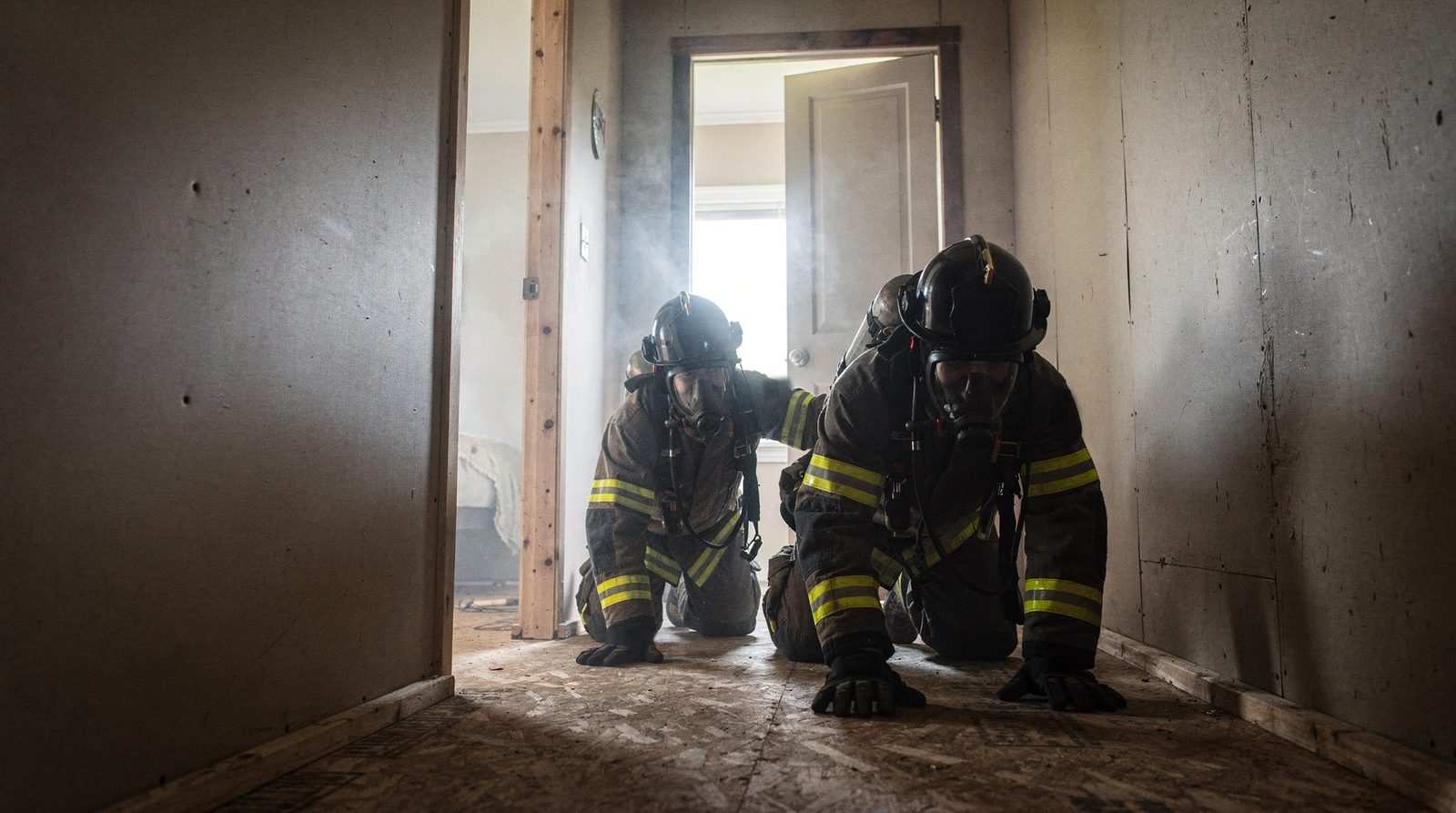
Recruits in the academy still learn what's called the Tarver Drill. Capt. Scott Douglas, a public information officer for the Phoenix Fire Department, described it to 12News: "We'll take firefighters and have them blackout their masks and have them stay on a hose line and listen to the reports of a lost firefighter," he said. "They attempt to locate that firefighter."
A drill like that can be set up in any training building. Run it with the number of people you'd actually have on a RIC assignment, time it, and watch the air gauges. If your crew can't get a firefighter out in time with four, you'll know how many more to ask for before you need them.
Sources (7)
Sources
- Supermarket fire claims the life of one career fire fighter and critically injures another career fire fighter, Arizona, F2001-13 (NIOSH)
- Phoenix firefighters undergo enhanced training in honor of fallen firefighter Bret Tarver (12News)
- Steve Kreis, Rapid Intervention Isn't Rapid (Fire Engineering), 2003
- Air Management, M.P. 202.05C (Phoenix Regional Standard Operating Procedures)
- The Effectiveness of Current Fire Fighter Rapid Intervention Teams (Justice Institute of British Columbia, funded by WorkSafeBC)
- 1910.134, Respiratory protection (OSHA)
- NFPA 1400, Standard on Fire Service Training (NFPA)