In this story
- The three considerations, in FSRI's words
- What does an instructor get?
- A month of drills
- Before Week 1: pre-work
- Week 1: coordinated exterior and interior suppression (TC 10)
- Week 2: isolate, then ventilate remote rooms (TC 11)
- Week 3: hydraulic ventilation after knockdown, then removal (TC 12)
- Week 4: kitchen-table close-out
- Officer checklist
- Sources
The fire was in a back-corner bedroom of a one-story, three-bedroom house in Miami-Dade Fire Rescue's Battalion 5, with burglar bars on every window. Neighbors said an elderly woman and her two daughters lived there. The woman was in the bedroom directly across the hall from the fire.
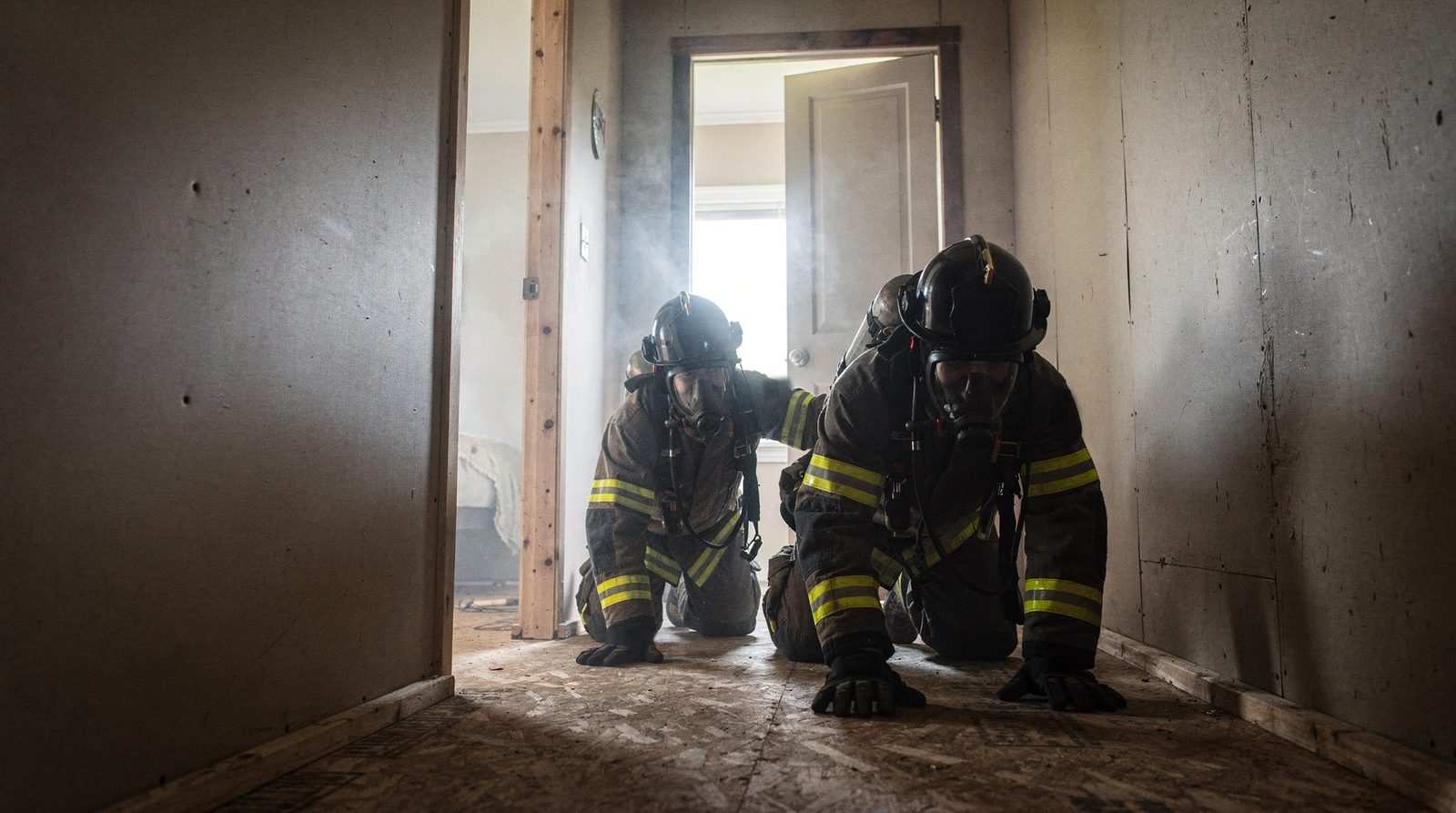
Engine 2 stretched to the front door while Medic Rescue 202 went in ahead of the line to search. When the searchers found fire extending into the hallway, they sent the engine past them to knock it down and kept the occupant's door shut until water was on the fire. Her bedroom windows were open. "Opening the bedroom door prematurely, before water was on the fire, could have created a flow path from the fire, across the hallway, to the open windows," Capt. Bill Gustin wrote. Once inside, the crew closed the door behind them, found the woman asleep in bed, and sheltered her in place until the hallway cleared enough to carry her out the front door.
That rescue used two ideas from the Fire Safety Research Institute's (FSRI) free online course, Search and Rescue Tactics in Single-Family Single-Story Residential Structures: isolate the occupant, and time the search with suppression. In April 2026, FSRI, part of UL Research Institutes, added three more tactical considerations to the course, bringing it to 12, along with drill sheets, time-to-task sheets and discussion guides.
The new considerations come from 10 experiments, reported in March 2026 as Part IV of FSRI's search and rescue series. The burns took place in purpose-built, furnished single-story houses with four bedrooms, two bathrooms, an open kitchen and living area, and working heating, ventilation and air-conditioning (HVAC). Only the tactics changed from burn to burn: when and where crews searched, flowed water and ventilated.
The goal, said lead author Keith Stakes, was to "measure the impact from firefighting tactics to victim survivability, and give the fire service simple, trustworthy guidance they can use on their next call."
The three considerations, in FSRI's words
Read these to the crew exactly as written before any drill. The wording is conditional ("consider," "provided sufficient resources") on purpose, and the conditions matter.
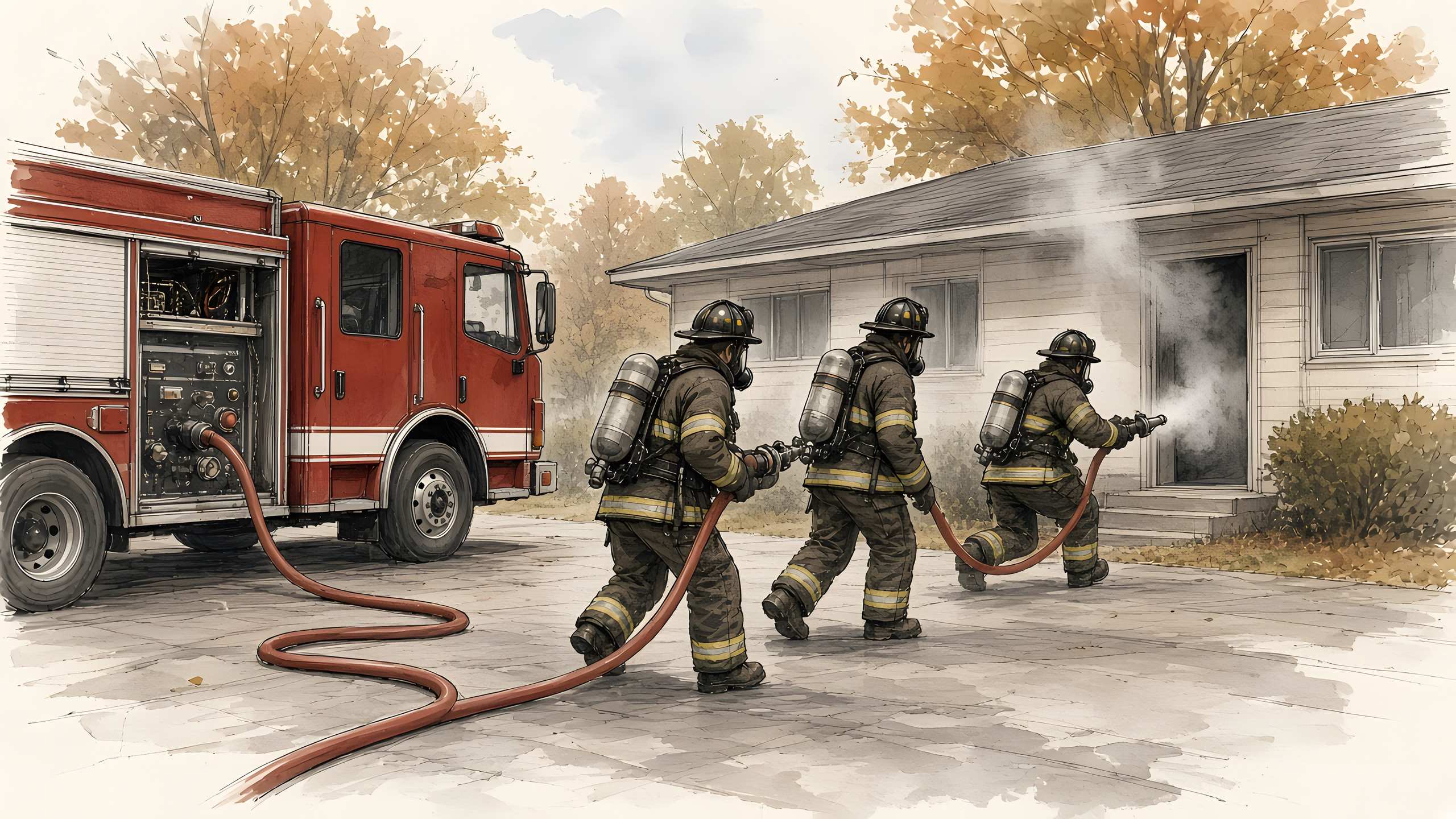
Tactical consideration (TC) 10 covers simultaneous exterior and interior suppression:
"Provided sufficient resources, upon arrival of a fully developed fire with extension to the exterior, consider conducting simultaneous execution of exterior and interior suppression operations."
In the test data, "a well-applied exterior stream provides rapid improvement on the interior," FSRI says, and coordinating it with the interior line gives victims and firefighters the best odds.
TC 11 covers local ventilation of remote compartments:
"Consideration should be given to locally ventilate compartments remote from the fire area as soon as possible. Pre-suppression, this would include isolation of the compartment prior to ventilation."
Distance from the fire doesn't make a room safe. FSRI notes that remote rooms are often where victims are found, and conditions there can keep getting worse after the fire is out if nobody tends to them.
TC 12 covers hydraulic ventilation right after knockdown:
"Immediately post-suppression, consider conducting hydraulic ventilation to increase the rate at which combustion gases exhaust from the structure."
Crews should also open the rest of the doors and windows and, if resources allow, put more than one hoseline on hydraulic ventilation in different areas, FSRI adds. The course says it works better coordinated with horizontal ventilation.
None of the three sets a flow rate, nozzle pattern, standoff distance or time target. Take those from your own nozzle and ventilation standard operating guidelines (SOGs).
What does an instructor get?
The course on FSRI's Fire Safety Academy now ships with:
- Five scenario drill sheets: victim removal, plus pre-suppression and during-suppression searches with known and unknown victim locations. Each lists objectives, safety reminders, and variables you can change, such as visibility, fire location and occupancy.
- Time-to-task sheets for three actions: forcing entry, single-room search, and drag-and-carry. FSRI suggests comparing drag-and-carry times against benchmarks developed by the fire service to spot training and staffing gaps.
- Continuing the Conversation discussion guides with reflection questions. Guides for TCs 1 through 9 came out in 2023, and the new set covers 10 through 12.
A Power User profile lets training officers assign the course and track progress and assessment results, even for in-person teaching.
A month of drills
These drills use FSRI's free materials and cover single-story, single-family homes, the occupancy FSRI tested. Don't stretch them to other occupancies without your own department's review.
Plan on online pre-work, three company drills of 60 to 90 minutes and a closing discussion. Run the drills in an acquired structure or a training prop, or mark doors and windows in your own station. None of the drills needs live fire. If you add it, follow your department's live-fire training requirements.
Use the safety reminders on FSRI's drill sheets as written. Survey any acquired structure before members go in, under your department's acquired-structure requirements. Treat every evolution on air as hard work: stage water and rehab, and stop for any member showing signs of heat stress.
Before Week 1: pre-work
- Assign the updated course through a Power User account.
- Every member finishes the three new lessons before Week 1. Members who never took the original course take all of it.
- The officer prints the sheets and picks which variables to change each week.
Week 1: coordinated exterior and interior suppression (TC 10)
The goal is a crew that can pair a brief exterior application with interior suppression and search on a fully developed fire with exterior extension, and can say when resources do and don't allow it.
Set up one fire room with an exterior window marked to show fire extension (a flag or placard works). Assign two hoselines, or one line and a second crew simulating another. The during-suppression drill sheets are the closest match by name.
- The officer gives a size-up that names "fully developed fire with extension to the exterior" and states the resources on hand.
- The officer makes the call out loud, simultaneous or not, and says why. The resource condition is part of the decision.
- If simultaneous, the exterior line simulates its application while the interior line and search crew advance. Each crew announces its action on the radio.
- Run it again with only one line available. The officer explains how the plan changes.
Afterward, ask what told the crew the fire was fully developed with exterior extension, how each crew knew what the other was doing, and what "sufficient resources" means for your first-due assignment.
Week 2: isolate, then ventilate remote rooms (TC 11)
The goal is searchers who isolate remote rooms before suppression, then ventilate them locally as early as possible, and who go back to those rooms after knockdown.
Mark the fire room at one end of the structure and two or three remote bedrooms at the other. Put a manikin in at least one remote room. The pre-suppression search sheet with an unknown victim location fits here; change the occupancy variable between runs.
- The search team enters, finds a remote room and closes its door.
- Before suppression, the team simulates opening that room's window and announces it on the radio.
- After suppression, the officer assigns someone to check and ventilate every remote room as well as the fire room.
- Time the single-room search on the time-to-task sheet.
Hold the order: isolate first, then ventilate. If a member opens a remote window without closing the door, stop the evolution and reset. Afterward, ask which remote rooms got forgotten after knockdown and which riding position owns remote-room ventilation on your fireground.
If you only get one drill in this month, run this one. It needs no extra equipment, and it builds the same door habit that protected the woman in Miami-Dade.
Week 3: hydraulic ventilation after knockdown, then removal (TC 12)
The goal is a nozzle team that moves to hydraulic ventilation the moment knockdown is called, with the rest of the crew supporting it, followed by a timed victim removal.
Keep the same layout, mark the window each line would use for hydraulic ventilation, and have a second line available, real or simulated.
- The nozzle team calls knockdown and moves straight to its marked window. Measure the gap between knockdown and the start of hydraulic ventilation.
- Other members open the remaining doors and windows in coordination with the nozzle team.
- On the second run, add a second line and have the officer assign it to hydraulic ventilation in another area.
- Finish with a drag-and-carry from a remote room to the exterior, recorded on the time-to-task sheet and compared with the benchmarks FSRI references. The victim removal sheet covers this step.
Nozzle technique comes from your own SOG. Afterward, ask what slowed the move from knockdown to ventilation, and whether the removal time showed a training gap, a staffing gap or both.
Week 4: kitchen-table close-out
- Work through the Continuing the Conversation guides for TCs 10 through 12, plus any earlier ones your crew hasn't covered.
- Write one SOG question per consideration to send up the chain, such as "Does our first-alarm assignment meet the 'sufficient resources' condition for TC 10?"
Then review the time-to-task sheets from Weeks 2 and 3. Treat them as training data, not performance standards, unless your department formally adopts them. Compare a crew with itself over time; ranking crews against each other discourages honest reporting. Write the drill-sheet variables next to every time, because a number without conditions can't be compared with anything. If a properly trained three-person crew can't meet the drag-and-carry benchmark, record that as a staffing finding.
Officer checklist
- Power User profile created, course assigned, completion tracked
- Every member finished the three new lessons before Week 1
- Drill sheets and time-to-task sheets printed as published
- TC 10 drill run with and without sufficient resources
- TC 11 drill held the isolate-before-ventilate order
- TC 12 drill measured the knockdown-to-ventilation gap
- Drag-and-carry times recorded with drill-sheet variables
- Discussion guides used at close-out
- SOG questions written and sent up
Keep running the drills after the month is over, until door control, remote rooms and the move to hydraulic ventilation after knockdown happen without an order.
Sources (9)
Sources
- UL Research Institutes, UL Research Institutes Updates Search & Rescue Training with New Tactical Considerations.
- FSRI, Updated Firefighting Search & Rescue Training: New Research Drives Strategies and Tactics.
- UL Research Institutes, UL Research Institutes Releases New Technical Report as part of its Study of Fire Service Residential Home Size-up and Search & Rescue Operations Project.
- FSRI, Fire Safety Academy.
- FSRI, Continue the Conversation: Search and Rescue Tactics in Single-Family, Single-Story Residential Structures.
- Keith Stakes, Rebekah Schrader and Ryan Chaffer, Analysis of Search and Rescue Tactics in Single-Story Single-Family Homes: Part IV, UL Research Institutes.
- Bill Carey, UL FSRI report outlines new firefighting tactics for search, suppression and ventilation coordination, FireRescue1.
- Bill Gustin, Analysis of a Rescue as It Relates to the New FSRI Training Program, Fire Engineering.
- FireRescue1, Fire Safety Research Institute launches 'Hot Drill Summer' search and rescue training challenge.