In this story
In Mount Fuji's Hoei eruption of 1707, ash fell about 8 centimeters deep in Ichihara, roughly 120 kilometers from the crater, according to Japan's Cabinet Office. The latest ashfall projection for an eruption on that scale, as reported by the Asahi Shimbun, puts about 9 centimeters of ash near Shinjuku in central Tokyo by the fifteenth day, and more than 30 centimeters (about a foot) around Hachioji, in western Tokyo. The local fire station says ash on that scale could leave ordinary engine-driven trucks unable to move.

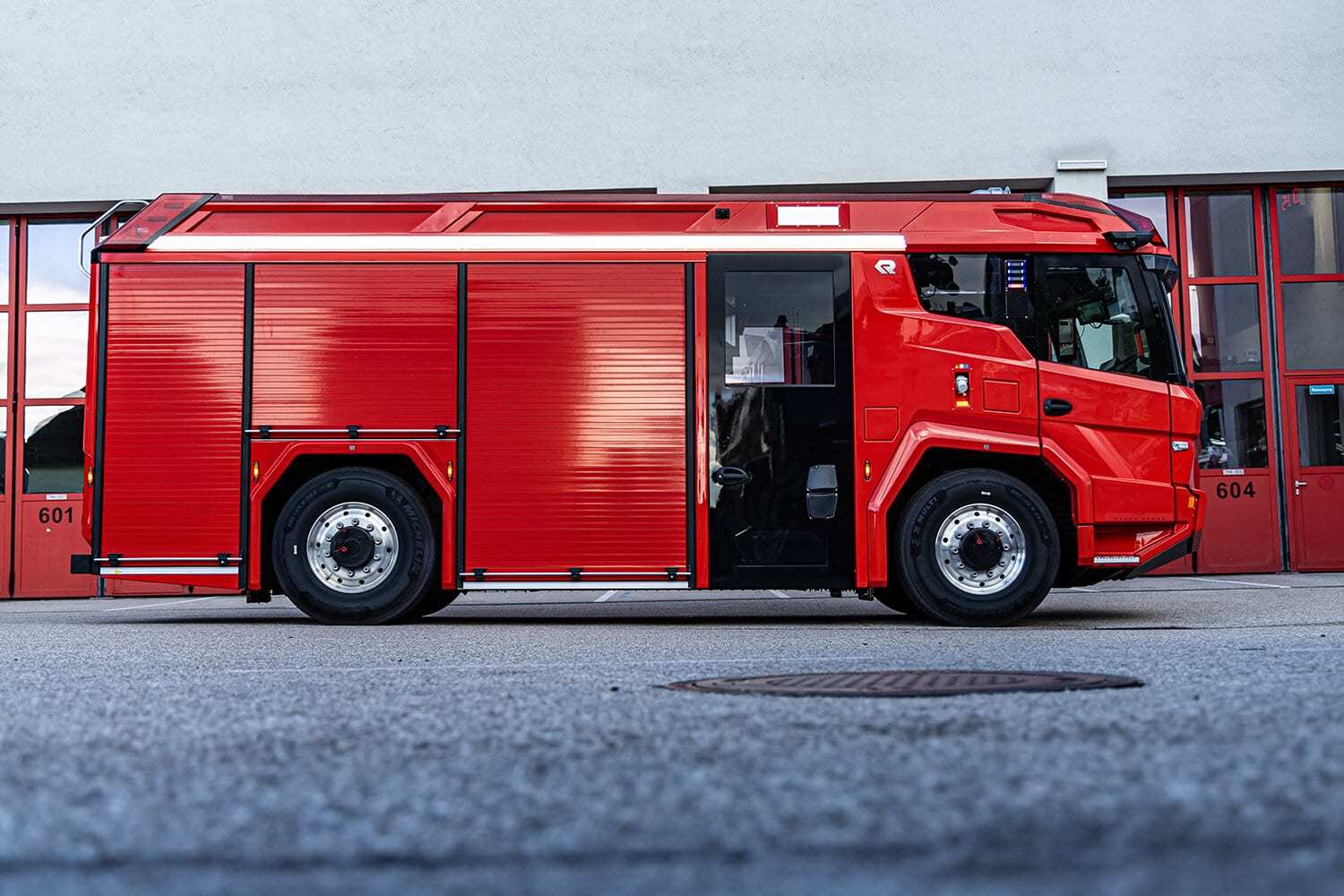
That is why Hachioji Fire Station now runs the Tokyo Fire Department's first fully electric fire engine. The truck is a Rosenbauer RT, short for Revolutionary Technology, and the station planned to put it in service on April 20. The station told the Asahi it is the first electric pumper in full-time service anywhere in Japan.
A Tokyo pumper that can keep working under ash
Fully electric operation keeps the RT ready when the air is full of ash particles, Rosenbauer says. The Hachioji unit is a pumper with a water tank and an auxiliary generator mounted on top of the body.
According to the Asahi report, the truck can:
- drive about 100 kilometers (62 miles) on its motors alone, and roughly 500 kilometers more with the generator running
- pump for about an hour on battery, and for about six hours in total with the generator
- raise its ride height by about 30 centimeters (a foot) on air suspension, to clear ash on the road
- steer the front and rear wheels separately, so it can turn tightly
It cost about 274 million yen and is larger than an ordinary pumper. A station official told the Asahi that the department wants to use its mobility to be ready to protect Tokyo residents from disasters.
"We will make use of this new vehicle, the first in Japan able to handle ash-covered roads, and keep working to be ready for every kind of disaster," Hachioji Fire Station Chief Okada told Town News (translated from Japanese).
Three weeks in Leonding
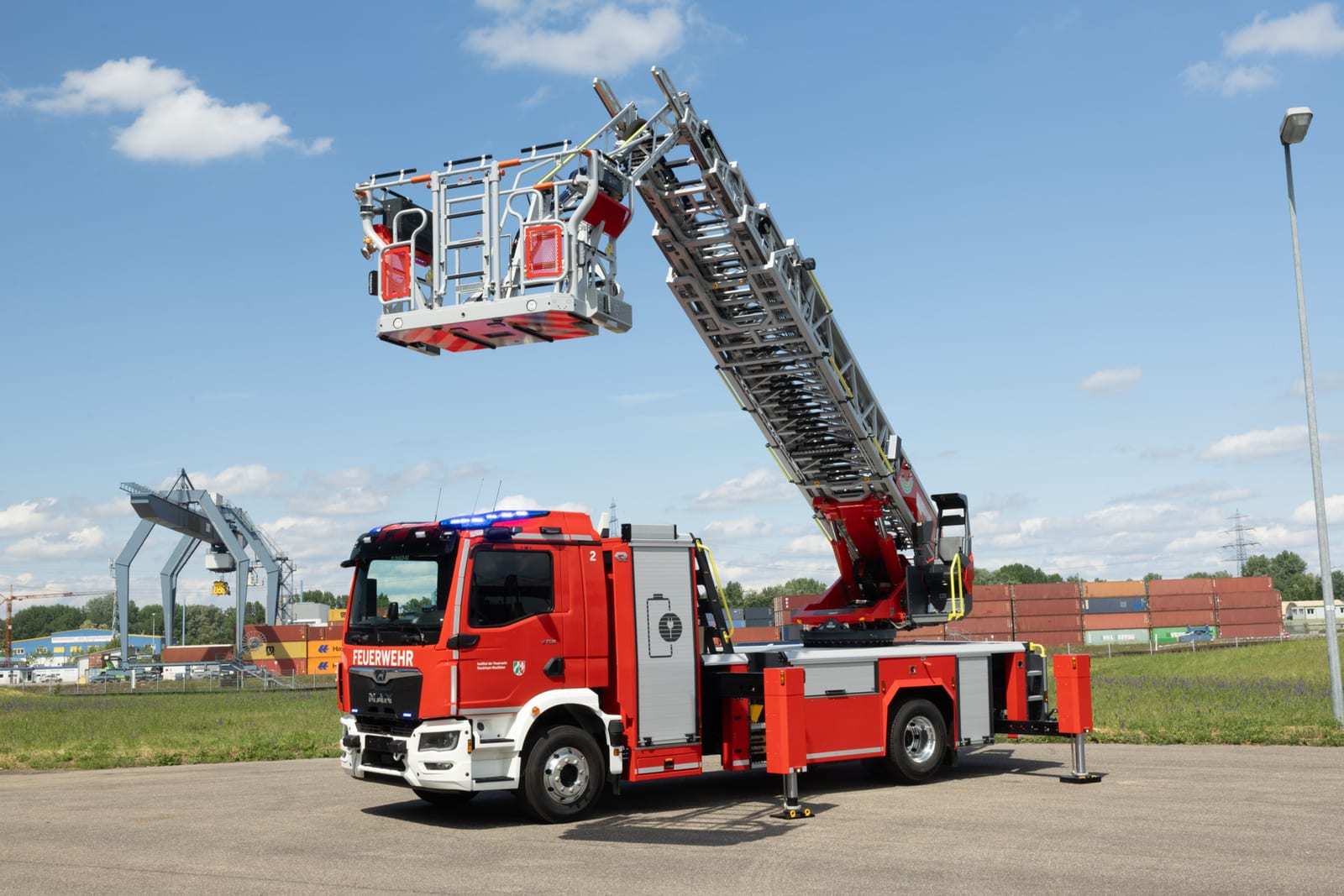
With more than 18,000 employees and over 600,000 operations a year, the Tokyo Fire Department is the largest in the world, Rosenbauer says. It has run Rosenbauer aerial ladders and tank firefighting vehicles since 2018. The RT still had to pass a long acceptance process at Rosenbauer's plant in Leonding, Upper Austria, before it shipped.
During the first week, Rosenbauer and its Japanese distribution partner, Teikoku Sen-I, worked out the test parameters and ran preliminary checks. In the second week, two inspectors from the Japan Fire Equipment Inspection Institution (JFEII), the official body that inspects fire equipment in Japan, supervised testing against Japanese standards. Most of it centered on the pump and the extinguishing system.
The pump ran an eight-hour endurance test to find its limits in a long operation. Afterward, the inspectors had the compression measured on the engine of the truck's energy backup system, even though it was brand new.
Then came the tilt table. Most countries require a static tilt angle of at least 30 degrees with full tanks. Japan requires 35 degrees on the tilt platform with the tanks empty, which puts the center of gravity higher, according to Rosenbauer.
Once the JFEII inspectors signed off, Tokyo Fire Department officers came to Leonding for the third week. They looked at operation and handling as well as pump performance, and at the airport site in nearby Wels they tested acceleration, top speed, braking, turning radius and driving behavior. All of the driving tests were done in fully electric mode.
The truck then went to Japan by sea, and Teikoku Sen-I ran further tests at its own plant to meet Japanese rules and documentation requirements.
Apart from a few changes, the Tokyo truck is a standard production RT. The suction piping was changed, a second suction pump was installed, and one compartment carries a fully rolled-up suction hose.
Ash country
Hachioji bought this truck for resilience, betting that a battery-electric pumper can keep working in a disaster that would stop engine-driven trucks. Departments in the Pacific Northwest and Alaska, where ashfall is a planning scenario, can watch Hachioji as a real test of that idea.
The acceptance process is worth borrowing too. Any builder offering a battery truck could reasonably be asked for the same eight-hour pump run and an empty-tank tilt test.